
Structured Procrastination (by John Perry)
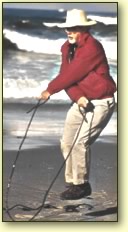
Figure 1: Author practices jumping rope with seaweed while work awaits.
I have been intending to write this essay for months. Why am I finally doing it? Because I finally found some uncommitted time? Wrong. I have papers to grade, textbook orders to fill out, an NSF proposal to referee, dissertation drafts to read. I am working on this essay as a way of not doing all of those things. This is the essence of what I call structured procrastination, an amazing strategy I have discovered that converts procrastinators into effective human beings, respected and admired for all that they can accomplish and the good use they make of time. All procrastinators put off things they have to do. Structured procrastination is the art of making this bad trait work for you. The key idea is that procrastinating does not mean doing absolutely nothing. Procrastinators seldom do absolutely nothing; they do marginally useful things, like gardening or sharpening pencils or making a diagram of how they will reorganize their files when they get around to it. Why does the procrastinator do these things? Because they are a way of not doing something more important. If all the procrastinator had left to do was to sharpen some pencils, no force on earth could get him do it. However, the procrastinator can be motivated to do difficult, timely and important tasks, as long as these tasks are a way of not doing something more important.
Structured procrastination means shaping the structure of the tasks one has to do in a way that exploits this fact. The list of tasks one has in mind will be ordered by importance. Tasks that seem most urgent and important are on top. But there are also worthwhile tasks to perform lower down on the list. Doing these tasks becomes a way of not doing the things higher up on the list. With this sort of appropriate task structure, the procrastinator becomes a useful citizen. Indeed, the procrastinator can even acquire, as I have, a reputation for getting a lot done.
The most perfect situation for structured procrastination that I ever had was when my wife and I served as Resident Fellows in Soto House, a Stanford dormitory. In the evening, faced with papers to grade, lectures to prepare, committee work to be done, I would leave our cottage next to the dorm and go over to the lounge and play ping-pong with the residents, or talk over things with them in their rooms, or just sit there and read the paper. I got a reputation for being a terrific Resident Fellow, and one of the rare profs on campus who spent time with undergraduates and got to know them. What a set up: play ping pong as a way of not doing more important things, and get a reputation as Mr. Chips.
Procrastinators often follow exactly the wrong tack. They try to minimize their commitments, assuming that if they have only a few things to do, they will quit procrastinating and get them done. But this goes contrary to the basic nature of the procrastinator and destroys his most important source of motivation. The few tasks on his list will be by definition the most important, and the only way to avoid doing them will be to do nothing. This is a way to become a couch potato, not an effective human being.
At this point you may be asking, "How about the important tasks at the top of the list, that one never does?" Admittedly, there is a potential problem here.
The trick is to pick the right sorts of projects for the top of the list. The ideal sorts of things have two characteristics, First, they seem to have clear deadlines (but really don't). Second, they seem awfully important (but really aren't). Luckily, life abounds with such tasks. In universities the vast majority of tasks fall into this category, and I'm sure the same is true for most other large institutions. Take for example the item right at the top of my list right now. This is finishing an essay for a volume in the philosophy of language. It was supposed to be done eleven months ago. I have accomplished an enormous number of important things as a way of not working on it. A couple of months ago, bothered by guilt, I wrote a letter to the editor saying how sorry I was to be so late and expressing my good intentions to get to work. Writing the letter was, of course, a way of not working on the article. It turned out that I really wasn't much further behind schedule than anyone else. And how important is this article anyway? Not so important that at some point something that seems more important won't come along. Then I'll get to work on it.
Another example is book order forms. I write this in June. In October, I will teach a class on Epistemology. The book order forms are already overdue at the book store. It is easy to take this as an important task with a pressing deadline (for you non-procrastinators, I will observe that deadlines really start to press a week or two after they pass.) I get almost daily reminders from the department secretary, students sometimes ask me what we will be reading, and the unfilled order form sits right in the middle of my desk, right under the wrapping from the sandwich I ate last Wednesday. This task is near the top of my list; it bothers me, and motivates me to do other useful but superficially less important things. But in fact, the book store is plenty busy with forms already filed by non-procrastinators. I can get mine in mid-Summer and things will be fine. I just need to order popular well-known books from efficient publishers. I will accept some other, apparently more important, task sometime between now and, say, August 1st. Then my psyche will feel comfortable about filling out the order forms as a way of not doing this new task.
The observant reader may feel at this point that structured procrastination requires a certain amount of self-deception, since one is in effect constantly perpetrating a pyramid scheme on oneself. Exactly. One needs to be able to recognize and commit oneself to tasks with inflated importance and unreal deadlines, while making oneself feel that they are important and urgent. This is not a problem, because virtually all procrastinators have excellent self-deceptive skills also. And what could be more noble than using one character flaw to offset the bad effects of another?
posted by widha @ 11:34 AM
1 comments

